

What MECSPE 2026 Taught Us About the Real State of ERP – MES and AI
Walking through the massive pavilions of MECSPE 2026 in Bologna, the physical reality of the Italian manufacturing industry is undeniable. Between the rhythmic humming of automated vertical warehouses and the heavy machinery displays, there is a clear narrative. The manufacturing sector is actively pursuing digital integration to maintain its competitive edge in a complex global market.
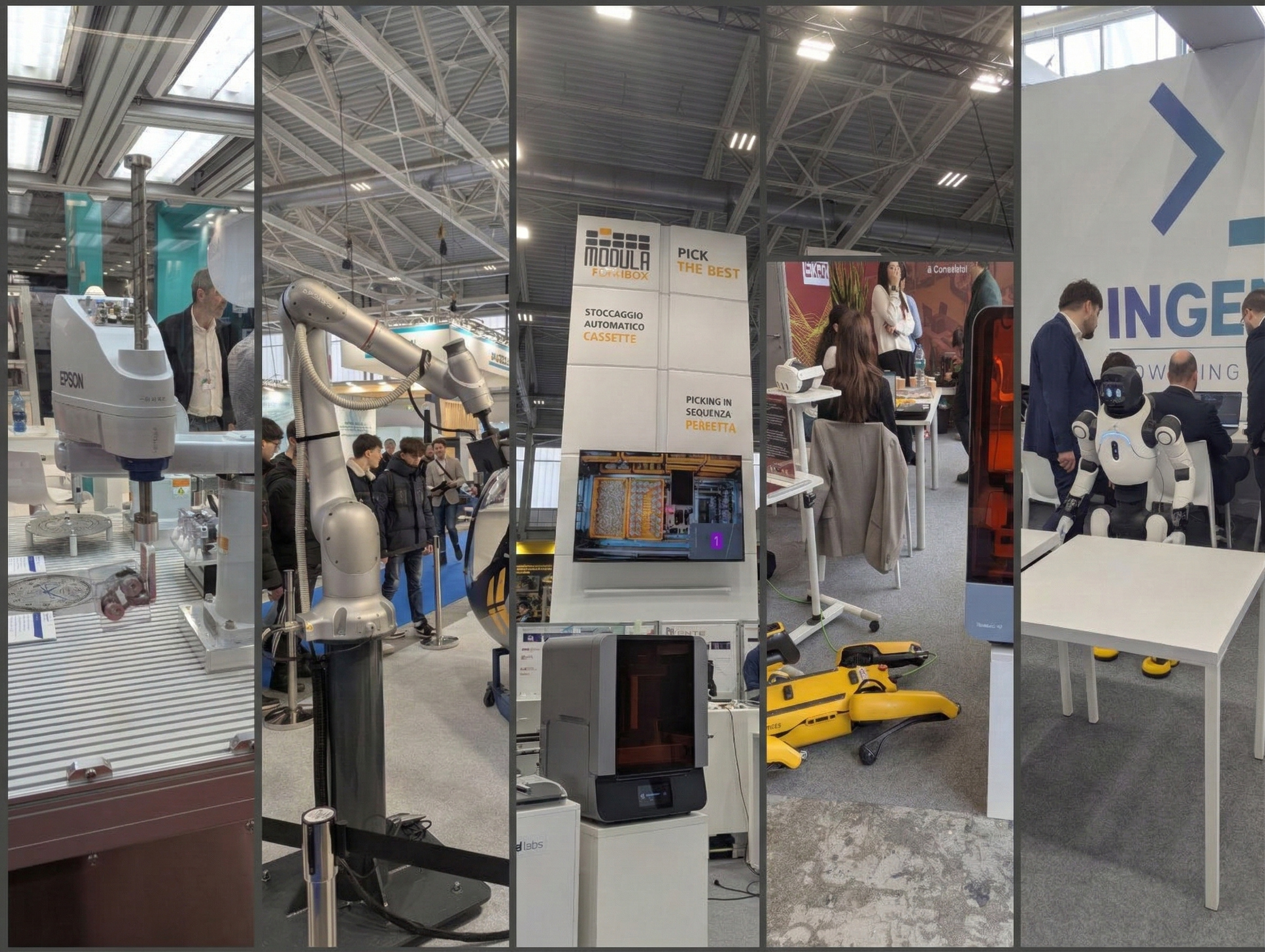
But as a Business Consultants, my primary focus was not just on the hardware. Along with Alessandro Rappini we spent time in the software pavilions, looking under the hood of the systems that actually run these machines. We wanted to see how the software industry is responding to the massive hype surrounding Artificial Intelligence.
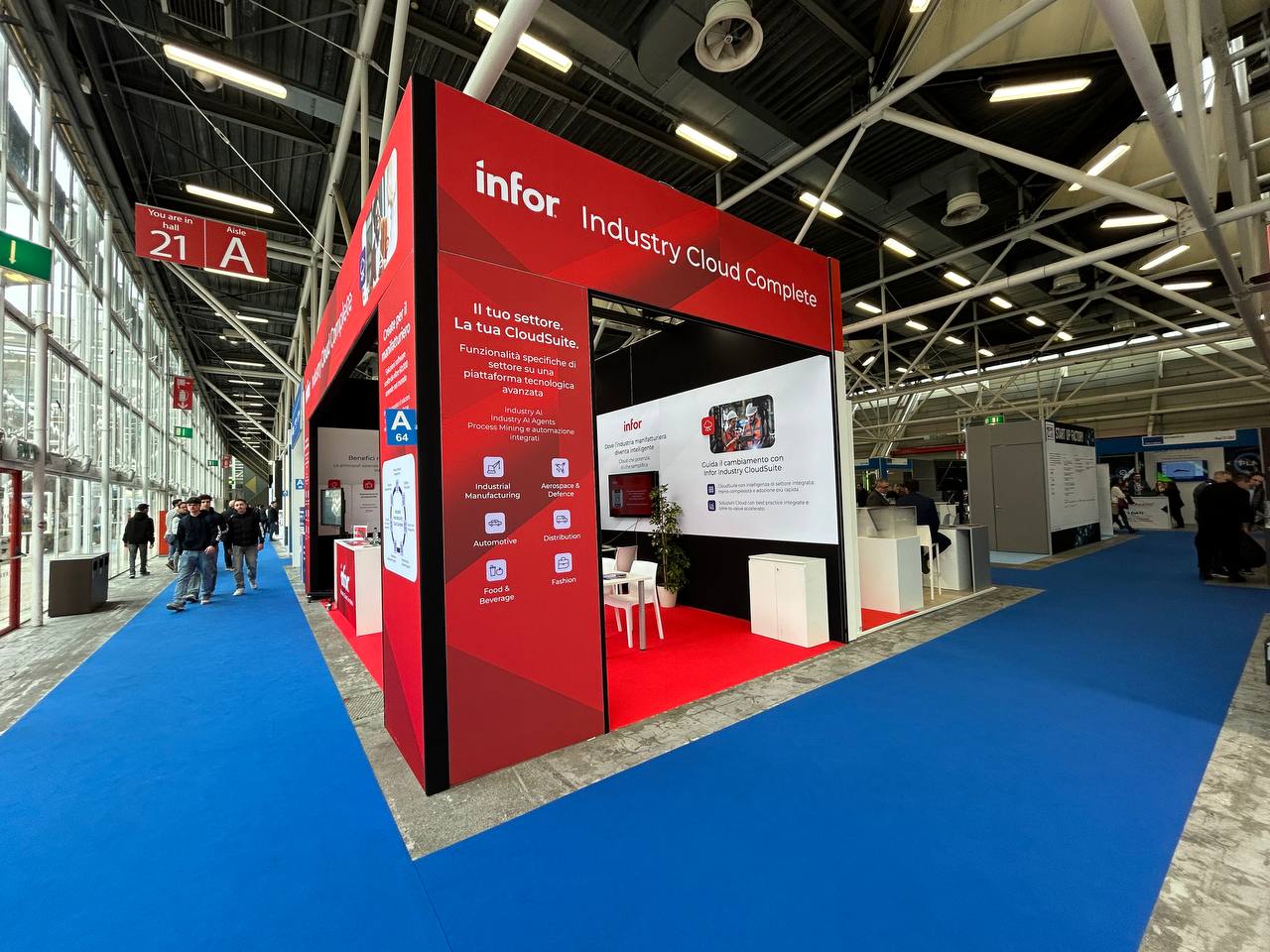
We visited the stands of global players like Infor, alongside strong national and European heavyweights such as Zucchetti, TeamSystem, and CentroSoftware. The word “AI” was plastered across almost every banner.
However, looking closely at the actual code and workflows revealed a very different, far more nuanced reality.
The Monoliths and the Chatbot Mirage
When you look at the major ERP and MES vendors today, the push for AI is loud but mechanically cautious.
In many of the legacy and monolithic software displays, the grand “AI integration” ultimately boiled down to a conversational chatbot bolted onto the side of the ERP dashboard. These tools are certainly useful for executing basic data retrieval, such as checking the inventory status of a specific component or pulling up a supplier’s open balance. But they are essentially advanced read-only queries wrapped in a natural language interface, relying entirely on human prompts rather than taking independent action.
This caution makes perfect sense from an enterprise architecture perspective. As I have written before, you cannot simply let a hallucinating algorithm overwrite your core financial ledgers or alter a complex Bill of Materials. The big players are taking careful steps because their clients demand absolute stability and compliance.
But a chatbot pulling up the current stock levels of an item or summarizing a supplier’s balance is a very long way from the autonomous, agentic execution we have been promised for 2026.
The Startup Sandbox: Where a Hint of the Next AI Implementation Happens
While the giants move cautiously, the startup ecosystem is treating AI as a foundational layer rather than an add-on. Here, I saw the true potential of Large Language Models applied to industrial logistics.
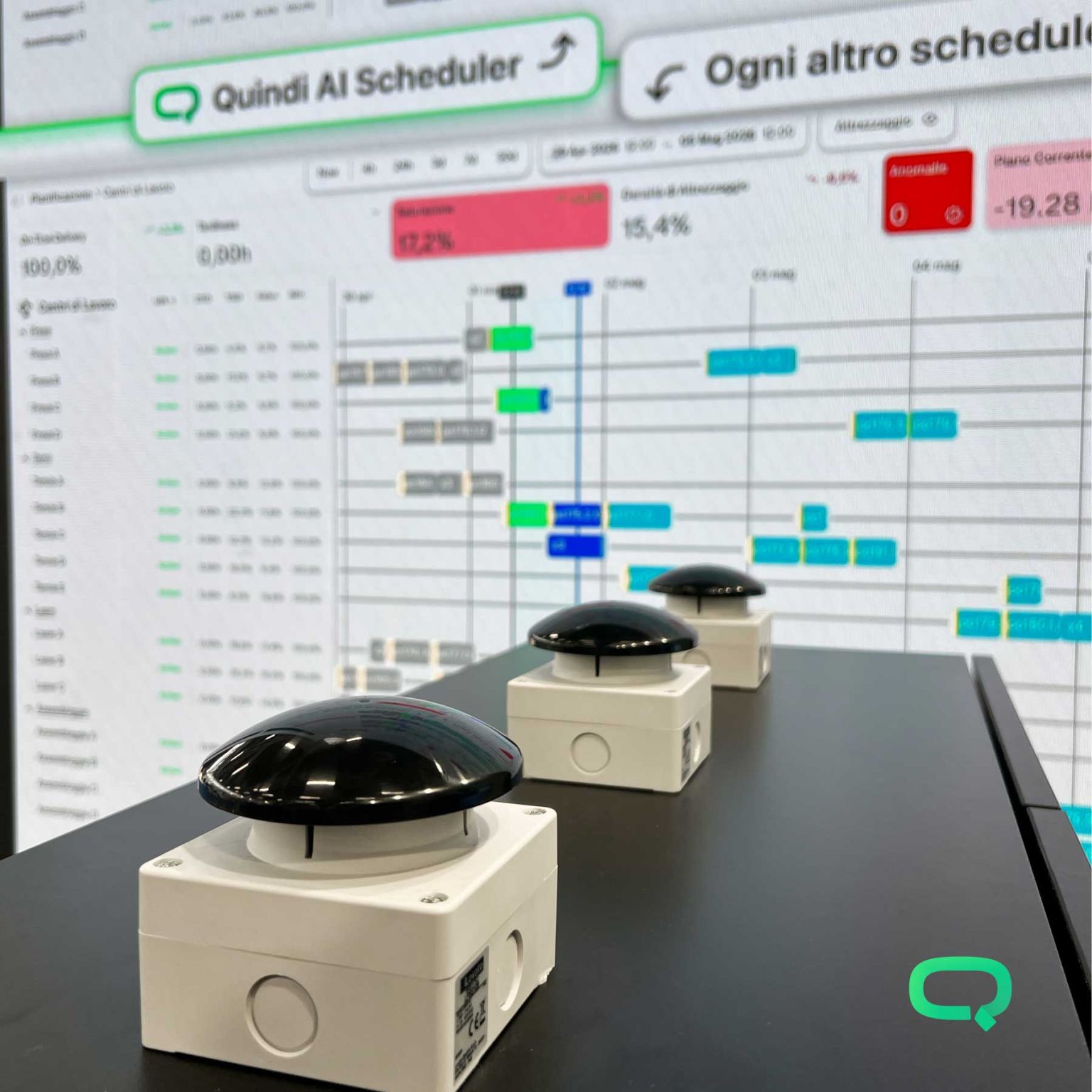
A perfect example was the stand of Quindi (a startup making waves with their work for companies like Bianchi). Their system applies LLMs directly to predictive mechanics, actively relieving the production planner from the nightmare of MES rescheduling.
Their demonstration was brilliant in its simplicity. They set up a ledwall with exactly two buttons.
One button simulates a real-time factory disruption. The second triggers the AI to instantly analyze the new constraints and propose a recalculated, profit-optimized production plan.
This is where the technology stops being a parlor trick and starts generating actual Return on Investment. Other agile software houses were showing similar innovations, using AI to rapidly construct BPM-style workflows on the fly and execute specific data collection sessions directly within the management software.
Because startups have lighter technical debt and fewer legacy constraints, they are currently driving the vanguard of practical AI application.
The Tool vs. The Product Reality
My main personal takeaway from MECSPE 2026 is a reality check on timelines.
On the software side, the industry is treating AI as a powerful tool available to developers, rather than a finished, boxed product ready for the end-user. When a company buys an AI solution today, they are essentially buying the raw LLM capability. Additionally, vendors rarely specify exactly which underlying model they are using, is it an American, European, or Chinese LLM, or internally built and trained? Is it running in the cloud? And if so, where exactly will the data reside? I find this omission highly critical when discussing proprietary enterprise data. Ultimately, once this third-party capability is acquired, the vendor and the client must then sit down and build the specific workflow together.
This highlights a fundamental truth about our industry. Corporate processes simply do not evolve as fast as software.
We hear endless chatter about 2026 being the “Year of the Agents.” But when the baseline reality for most companies is still a simple chatbot integrated into a dashboard, we must admit we are still far from true automated agentic execution, at least in our industry. The technology might be ready, but the data governance and human processes are lagging years behind.
The Immediate Win: Visual Simplification
So, if autonomous agents are still on the horizon, what is the immediate focus for ERP users today? The answer I saw across the board at MECSPE was simplification.
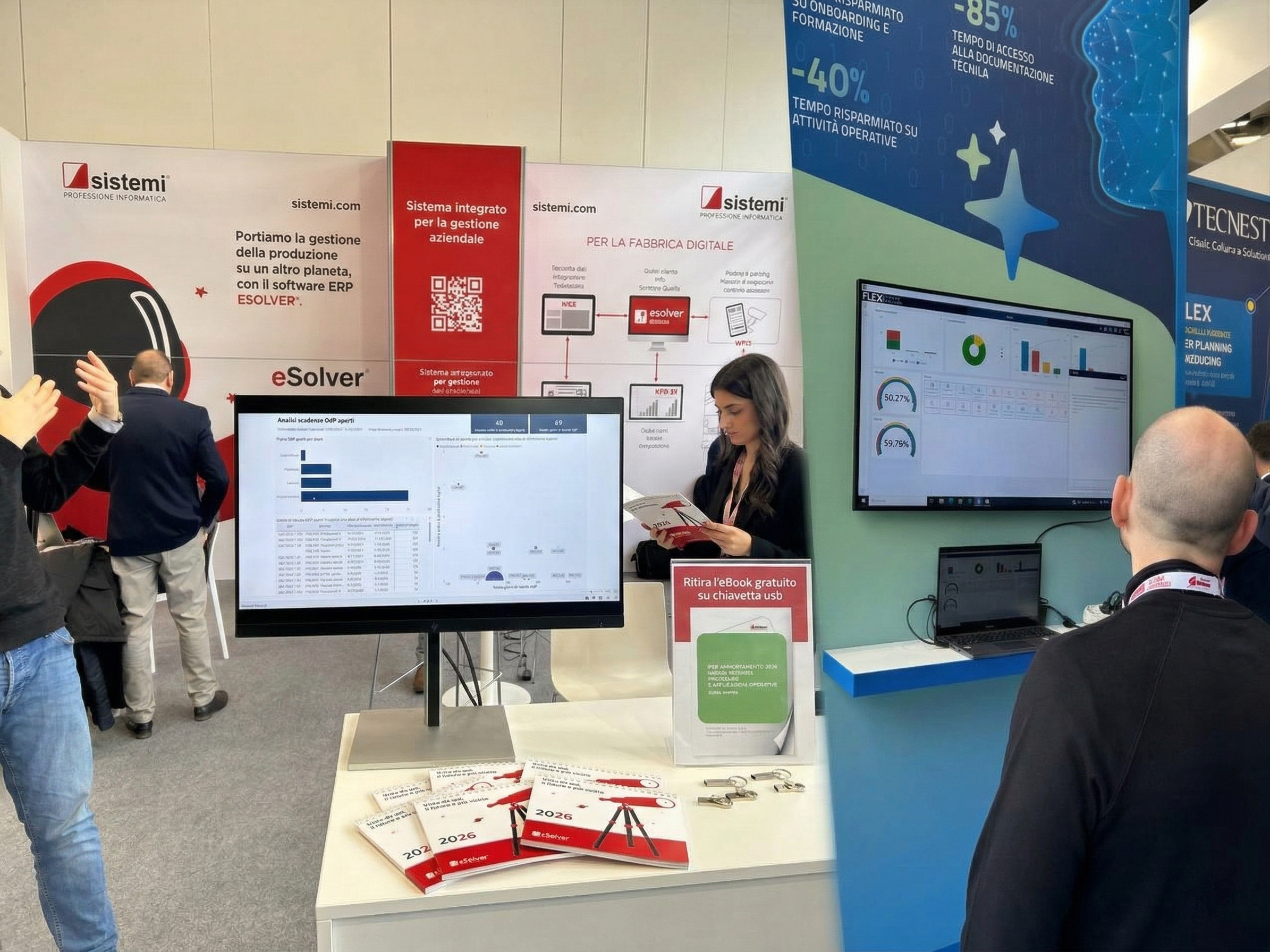
Every single vendor, large or small, is actively trying to reduce the number of clicks required to get a job done. The focus has shifted aggressively toward visual representations and actionable data, primarily through intelligent widgets.
Users need to see the health of their supply chain at a single glance. They need actionable buttons directly on their home screens
This is exactly the philosophy we apply with our P2-i Widgets for Infor LN. Before you can trust an AI to run your factory, you need your human operators to have clear, immediate, and visual control over their ERP data. Simplifying the interface is the mandatory first step toward future automation.
Actionable Insights for Enterprise Leaders
If you are a CEO or IT Director navigating the noise of the current AI hype, here is what you need to focus on right now:
- Look Past the Chatbot: When evaluating an ERP update, do not be distracted by conversational bots. Ask the vendor how their AI handles dynamic rescheduling, anomaly detection, or complex workflow automation.
- Avoid Any Vendor Religion Trap: Do not blindly marry a single software ecosystem. Focus instead on ensuring your core software has the modern tools and architecture required to seamlessly integrate specialized verticals (such as Infor’s API-first approach through Infor OS and the ION integration network). If your monolithic ERP is moving too slowly, it might be worth exploring agile integrations. Innovative tools showcased by emerging startups suggest that you could successfully layer smart, predictive models on top of your existing execution systems.
- Clean Your Data First: None of these advanced scheduling tools will work if your legacy data is dirty. An AI cannot optimize a production floor if the routing times in your system have not been updated since 2018.
- Invest in Visuals Now: Before chasing autonomous agents, invest in UI simplification. Implement widgets and dashboards that reduce clicks for your current workforce. If your humans cannot easily read the data, an AI will not save you.

The Road Ahead
MECSPE 2026 proved that the industrial sector is hungry for innovation. But it also proved that we must temper our expectations. AI is absolutely the future of the enterprise, but it will arrive through careful, collaborative engineering, not magic.
Written by Andrea Guaccio
March 9, 2026