

When Software Writes Itself: The Illusion of the Homebrew ERP
A few days ago, Bas van der Veldt, the CEO of the Dutch software giant AFAS, shared a fascinating personal story that perfectly captures the current existential crisis of the tech industry.
Over a weekend, without writing a single traditional line of code, he built a fully functional “vitamin manager” application for his household.
He used a process called vibecoding, simply talking to an AI interface that handled the database, the backend, and the user interface. He then watched a colleague build an automated partner license checker in just a few hours using the same method.
This rapid development cycle led him to ask a profoundly uncomfortable question for someone running a major software company.
If anyone can program their own applications today, why do established software vendors still exist? Why wouldn’t companies simply build their own custom ERP systems and stop paying massive subscription fees?
This question is currently echoing through boardrooms across Silicon Valley and the global tech landscape.
With the rapid advancement of autonomous AI agents capable of generating entire software architectures, the barrier to entry for application development has dropped to zero.
The market reaction has been swift and brutal, fueled by the belief that every company will soon build its own internal tools and abandon legacy providers.
However, this narrative fundamentally misunderstands the nature of enterprise software. The ability to generate code has been conflated with the ability to engineer a compliant, scalable, and secure business system.
The Video Game Fallacy
To understand the gap between generating code and building a system, we can look at the video game industry. Today, generative AI can effortlessly create a beautiful 3D model of a character or write a basic script for enemy movement. A teenager with access to these tools can generate impressive visual assets in an afternoon.
Creating a masterpiece requires an entirely different level of engineering. A complex cooperative multiplayer game demands intricate level design, perfectly balanced combat mechanics, robust network architecture to handle latency, and a compelling narrative structure. The generated 3D models are merely the visual layer of a massive underlying physics and logic engine.
Enterprise software operates on the exact same principle. An ERP system like Infor LN or SAP is not merely a collection of Python scripts and database tables wrapped in a user interface. These platforms are crystallized repositories of international business knowledge. They contain decades of embedded logic regarding supply chain compliance, localized tax regulations across dozens of countries, strict accounting principles, and rigorous security protocols.
Generating a web form that updates a customer database is trivial. Generating a system that automatically calculates the correct depreciation of an asset according to specific national tax laws while simultaneously updating inventory valuation and triggering a compliant procurement workflow is an entirely different challenge. The code is the easiest part of that equation (to all the developers reading this—please don’t kill me). The true difficulty lies in understanding the complex web of rules governing the business world.
The Cost of Accountability
When a company buys an enterprise software license, they are purchasing something far more valuable than the underlying code. They are purchasing accountability.
In his reflection, the AFAS CEO noted that while his homebrew vitamin app works perfectly, he cannot look under the hood to fix it if the AI hallucinated a structural flaw. For a household app, a glitch is simply a minor inconvenience. For a multinational corporation, a single hallucinated data point can halt physical supply chains and trigger serious compliance audits.
Van der Veldt highlighted that a software company’s true right to exist comes down to putting your hand in the fire for your product. You need deep expertise in both the content and the technology to guarantee that a system meets the stringent reliability requirements of financial audits and corporate governance.
This sentiment is shared widely among pragmatic tech leaders. Sateesh Seetharamiah, CEO of EdgeVerve, recently discussed the disruptive power of AI in the workplace. He acknowledged the massive productivity gains but firmly stated that ultimately there has to be a human being to take accountability.
This lack of inherent trust is not just a user problem. As I explored in my recent analysis, The AI Exodus: Why the Builders Don’t Trust the Building, even the engineers and researchers developing these foundational models are increasingly vocal about the dangers of deploying autonomous systems without strict human oversight. If the builders themselves do not trust the foundation, enterprise leaders cannot be expected to bet their global operations on it.
This is the impenetrable moat protecting complex Systems of Record. A custom AI generated application is a black box. If a company builds its own internal financial engine using AI and that engine incorrectly calculates corporate tax liabilities leading to massive fines, the company bears the entire legal and financial burden alone. Partnering with an established vendor transfers a significant portion of that risk. Businesses buy ERP systems because they need a legally accountable entity standing behind the software.
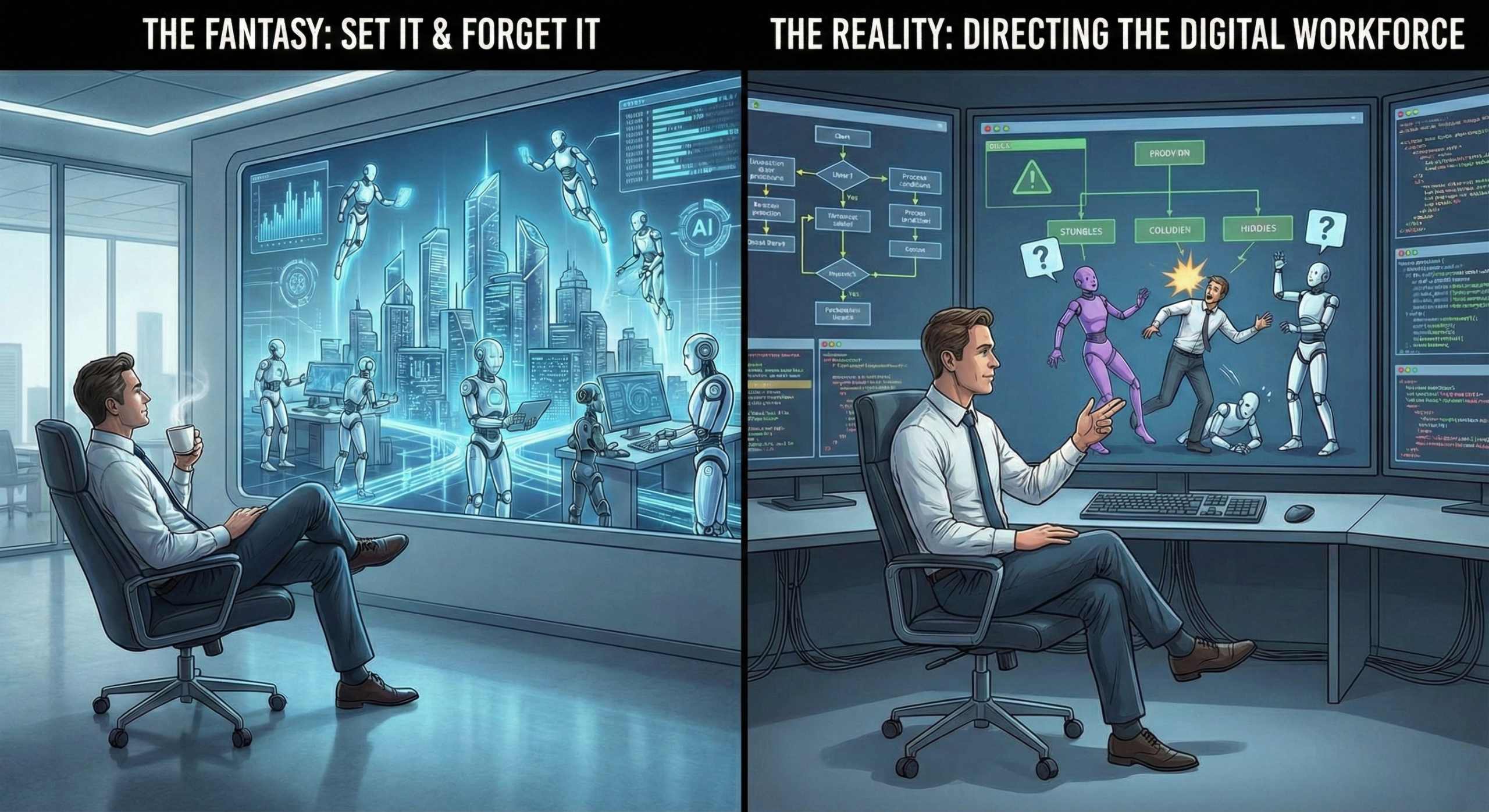
Directing the Digital Workforce
The commoditization of code also triggers a dramatic shift in the consulting world. For years, a large portion of ERP consulting involved highly technical, repetitive tasks. Consultants spent countless hours mapping data fields, writing custom scripts for integrations, and configuring user permissions.
As AI agents absorb these low level execution tasks, the role of the consultant must elevate. The focus shifts entirely toward system architecture, process optimization, and risk management.
We are moving away from asking how to configure a system to asking why a system should be configured in a specific way. When an AI agent suggests altering a global supply chain route to save costs, the human consultant must evaluate that suggestion against geopolitical risks, supplier reliability, and long term corporate strategy. The value of human expertise transitions from the speed of execution to the depth of judgment.
This reality is echoed by the leaders building the hardware powering this entire revolution. Reacting directly to the recent market panic surrounding SaaS stocks, Nvidia CEO Jensen Huang firmly dismissed the idea of an immediate human replacement. Alongside other tech veterans, he clarified that the goal of these advanced models is unprecedented productivity, elevating human workers to act as directors of their own digital teams. While algorithms provide massive execution power, setting objectives, ensuring compliance, and making strategic choices remain deeply human responsibilities. The assumption that AI will simply delete human workers completely ignores the practical needs of enterprise operations.
Furthermore, human inertia remains the strongest force in the corporate universe. Technology advances at an exponential rate, but organizations adapt at a glacial pace. Migrating a company to a new operational model requires navigating internal politics, retraining thousands of employees, and overcoming a natural resistance to change. An AI agent can write a perfect software migration script in seconds, but it cannot convince a skeptical department head to abandon a spreadsheet they have used for twenty years.
The Future of the SaaS Model
The fear surrounding the SaaS business model is partially justified, but the timeline and outcome are often misrepresented. The traditional model of charging strictly for user access is facing severe pressure. Vendors are realizing that as AI handles more automated tasks, fewer humans will need to log into the system daily.
This realization is driving a pivot toward outcome based pricing models. Software giants are beginning to explore ways to charge for the value delivered by the system, such as the number of invoices processed autonomously or the successful optimization of a logistics network.
The software vendors that survive this transition will be those who recognize that their code is no longer their primary asset. Their true assets are their deep understanding of industry specific regulations, their robust security architectures, and their willingness to assume the burden of accountability for their clients.
The idea that every company will suddenly become its own software vendor ignores the fundamental realities of business risk and compliance. The market will undoubtedly see a purge of thin wrapper applications that offer little more than a pretty interface over basic AI functionalities.
However, the foundational systems that run the global economy will remain firmly in the hands of organizations that can guarantee their reliability at scale. The future belongs to those who understand that while code has become cheap, trust remains incredibly expensive.
Written by Andrea Guaccio
February 24 2026