

Den mänskliga koden för ERP: En överlevnadsguide för företagsprogramvara
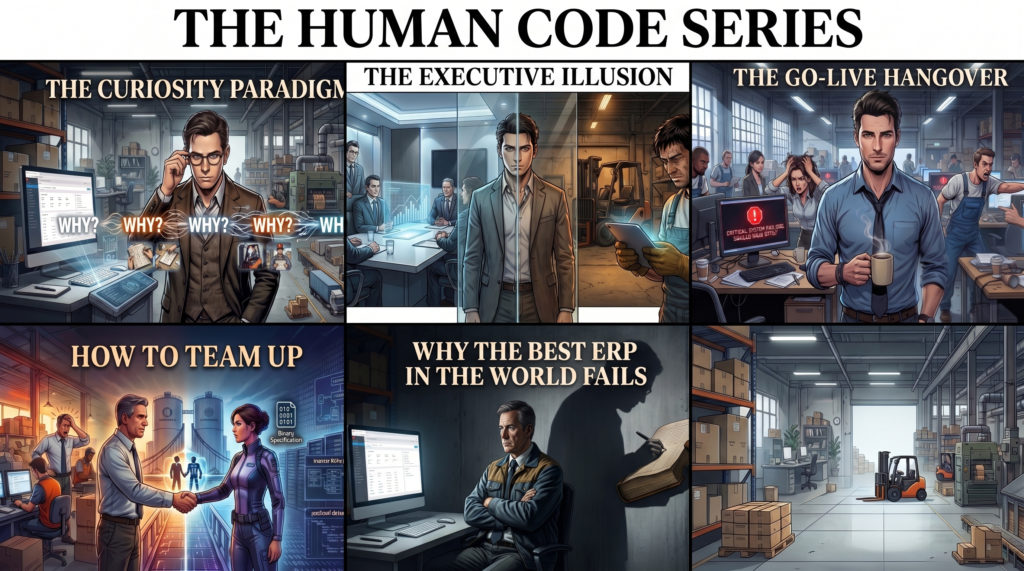
Varje år spenderar företag miljontals dollar på nya ERP-system. De köper den mest avancerade molninfrastrukturen som finns tillgänglig. De anställer lysande utvecklare för att anpassa arkitekturen. De planerar noggrant Go-Live-datumet månader i förväg och orkestrerar varje enskilt tekniskt steg.
Ändå stannar projekten av. Användare bojkottar tyst de nya skärmarna. Du går in i lagret en månad efter lanseringen och upptäcker att golvchefen fortfarande kör sitt skift med hjälp av ett dolt Excel-ark som är sparat på hans skrivbord. Helger med driftsättning förvandlas till månader av utmattande skadekontroll.
Vi skyller ofta på programvaran. Vi skyller på saknade funktioner, långsamma databaser eller alltför komplexa anpassningar. Jag tror att sanningen ligger någon annanstans. Grundorsaken till nästan alla misslyckanden med företagsprogramvara är dålig psykologi. Vi fokuserar på den digitala koden och ignorerar den mänskliga faktorn.
Välkommen till ERP:s mänskliga kod.
Denna serie i fem delar är en guide för konsulter, projektledare och IT-proffs som vill se bortom de tekniska parametrarna, såväl som för nyckelanvändare som är villiga att kliva in i situationen för dem som sitter mitt emot oss (spoiler alert: vi). Det är en ärlig guide till att överleva den röriga, oförutsägbara och intensivt mänskliga verkligheten av att förändra hur människor faktiskt arbetar.
Nedan finns seriens kompletta index.
Del 1: Varför världens bästa ERP-system misslyckas (om du inte vet hur du ska lyssna)
Vi börjar med att ta itu med det svåraste hindret i alla programvarumigreringar: muren av användarmotstånd. Att ändra ett äldre system utlöser genuin sorg och rädsla för inkompetens hos de människor som använder det dagligen. I årtionden var deras professionella självförtroende knutet till att veta exakt hur man navigerar i den gamla programvaran. Det nya systemet tar plötsligt bort all den hårt förvärvade stoltheten, vilket får dem att känna sig som förvirrade nybörjare redan på sin första dag.
Vi utforskar hur man kan övervinna mentaliteten "vi har alltid gjort det så här". Vi kommer att prata om hur man tillämpar 20/80-regeln att lyssna för att avslöja verkliga affärsproblem istället för att bara föreläsa användare om nya funktioner. Vi diskuterar varför det att skugga en operatör vid deras skrivbord bygger absolut förtroende i verkstadsgolvet innan du ens skriver en enda rad kod.
Del 2: Hur man samarbetar: Bygg en sann allians mellan funktionella och tekniska konsulter
Funktionella och tekniska team talar ofta olika språk, vilket leder till försenade tidslinjer och djup frustration. En funktionell konsult kan se en mjukvaruintegration som en enkel konceptuell brygga, medan den tekniska konsulten ser en mardröm av nyttolaster, timeouts och saknade datavalideringar. Denna frånkoppling förstör projekt inifrån.
Vi utforskar hur man kan komma förbi den ömsesidiga frustrationen och bygga ett genuint, stödjande partnerskap. Vi kommer att diskutera hur man skriver tydliga binära specifikationer och översätter kaotiska affärsbehov till tydlig logik. Dessutom täcker vi hur funktionella konsulter måste fungera som en sköld för att skydda sina utvecklare från omöjliga kundkrav och främja en kultur av ömsesidigt försvar.
Del 3: Nyfikenhetsparadigmet: Varför de bästa konsulterna inte vet allt
Pressen att memorera varje systemsession och parameter ruinerar fantastiska yrkesverksamma. I början av en konsultkarriär tror många att deras värde är lika med mängden programvarumanualer de har proppat i huvudet. Vi tittar på den avgörande skillnaden mellan att agera som ett vandrande programvaruuppslagsverk och att agera som en sann affärsutforskare.
Du kommer att upptäcka varför det är oändligt mycket mer värdefullt att ställa grundläggande frågor, gå runt på fabriksgolvet och djupt förstå klientens dagliga smärta än att ha ett perfekt minne. Vi diskuterar också den enorma kraften i att erkänna att man inte vet ett svar direkt, och hur den ärligheten faktiskt bygger massiv trovärdighet hos dina klienter.
Del 4: Ledningens illusion: Styrelserum kontra verkstadsgolv
Chefer köper ett ERP-system för att få absolut insyn och ekonomisk kontroll in i minsta detalj. Lageroperatörer vill bara avsluta sitt skift utan att behöva klicka på tio extra knappar för att flytta en enda pall. Dessa två helt olika världar kolliderar oundvikligen under varje projekt, vilket gör att båda sidor blir frustrerade och känner sig djupt missförstådda.
Vi utforskar hur man kan överbrygga denna klyfta och hitta en hälsosam balans mellan styrelserummets förväntningar och den vardagliga verkligheten hos de som utför fältarbetet. Vi kommer att utforska konsten att visa respektfullt motstånd. Vi diskuterar hur man skyddar de som gör det tunga arbetet genom att utforma rena, enkla processer för den trötta operatören på fredagseftermiddagen, och säkerställer att systemet faktiskt implementeras istället för att bojkottas i tysthet.
Del 5: Baksmällan vid start: Navigera dag ett
Helgen med korta öppningar är slut, systemet går online och adrenalinet avtar plötsligt. Vi tar upp den råa verkligheten dagarna direkt efter en lansering, där stressen är påtaglig och även ett mindre problem kan få en redan trött användare att känna sig helt överväldigad.
Vi kommer att titta på hur man kan bryta myten om den felfria övergången och omdefiniera framgång för dag ett. Vi utforskar varför det att gå ut på golvet som ett lugnt, fysiskt ankare dämpar panik snabbare än någon mjukvaruuppdatering. Slutligen diskuterar vi hur man filtrerar bruset och firar de små, fula vinsterna som håller teamet framåt.
Framtiden tillhör den mänskliga koden
Programvara kommer att fortsätta utvecklas i en rasande fart. Vi övergår redan till molnarkitekturer. Artificiell intelligens kommer att automatisera de flesta tekniska konfigurationerna, ta över en stor del av kodskrivandet och svara på vanliga supportärenden.
I en värld som styrs av smarta algoritmer kommer förmågan att hantera ett programgränssnitt att förlora sitt värde. De yrkesverksamma som kommer att blomstra under det kommande decenniet är de som behärskar de färdigheter som en maskin inte kan replikera. Empati, aktivt lyssnande, medling mellan team och mänsklig nyfikenhet kommer att bli våra största professionella tillgångar.
Om du vill överleva och lyckas i den här branschen måste du sluta behandla användare som datainmatningsmaskiner och börja behandla dem som riktiga partners. För i slutändan är den här serien skriven för människorna bakom skärmarna.
Skriven av Andrea Guaccio
23 april 2026