

Varför världens bästa ERP misslyckas (om du inte vet hur du ska lyssna)
(Del 1 av 5 i serien “Den mänskliga koden för ERP”)
Du kan konfigurera ditt ERP-system perfekt. Men om en lagerchef inte litar på dig är ditt miljonprojekt redan dött. Här är den bistra, outtalade sanningen om ERP-implementeringar.
Den verkliga anledningen till att användare säger nej
För några år sedan, när jag var på en kunds arbetsplats under ritningsfasen, lade jag märke till en bekant blick i ögonen på en av användarna. Det var den där klassiska blandningen av skepticism blandad med tristess hos någon som hör samma gamla företagssaga upprepas för hundrade gången.
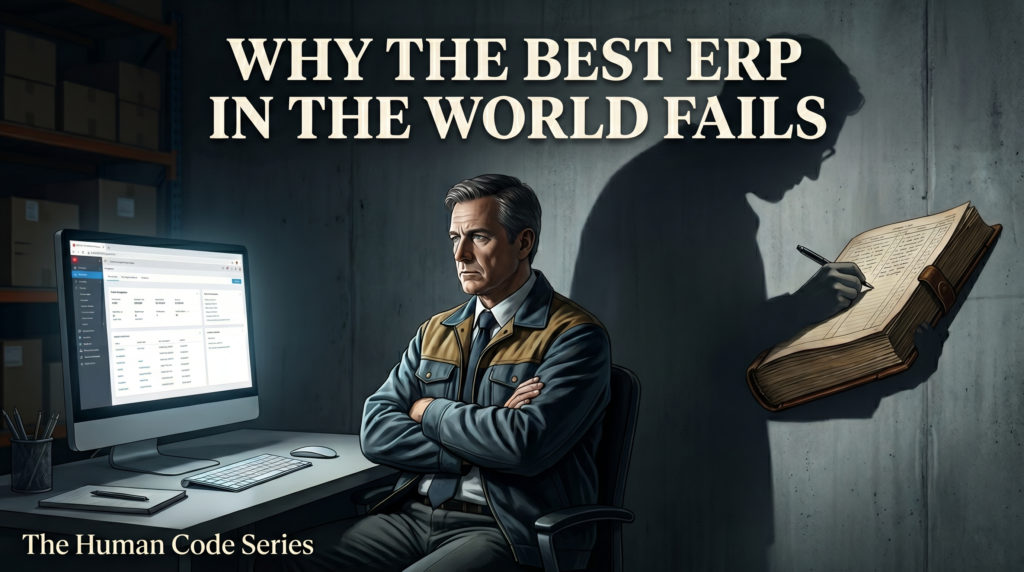
Efter att ha pratat en stund pausade jag och frågade om han ville tillägga något. Han korsade armarna, vilket är ett lärobokstecken på förnekelse inom beteendepsykologi, och konstaterade rakt ut att det nya affärssystemet aldrig skulle fungera. Det var "för generiskt", menade han, och ignorerade helt de många särdrag som gjorde deras verksamhet unik.
Jag insåg just då att hans kritik riktade sig mot den massiva, överväldigande förändring som dolde sig bakom programvaran.
Och i det ögonblicket blev jag påmind om konsultverksamhetens gyllene regel: dålig psykologi dödar fler ERP-projekt än dålig kod någonsin kommer att göra.
Välkommen till den första delen av ERP:s mänskliga kod, en serie helt tillägnad de människor som faktiskt måste trycka på tangenterna, och som ser bortom bitarna, bytena och API:erna i vårt jobb. Idag pratar vi om den svåraste barriären att bryta i en mjukvarumigrering: muren av "vi har alltid gjort det så här".
Sorgen över det arvssystem
När ett företag beslutar sig för att ändra sitt ERP-system ser ledningen en uppgradering. De ser realtidsdata, AI-beredskap och effektiviserad verksamhet.
För slutanvändaren känns det som en djup förlust av identitet att byta ERP-system. I bästa fall ser de det som slöseri med tid eftersom de redan har memorerat alla nödvändiga steg i det gamla systemet. Bara tanken på att behöva lära sig något helt nytt från grunden uppfattas mer som ett straff än ett genuint sätt att förbättra sitt dagliga arbetsflöde.
Tänk på det. Den erfarne nyckelanvändaren från min berättelse hade ägnat tjugo år åt att bemästra det gamla systemets egenheter. Han visste exakt vilka genvägar han skulle använda för att kringgå ett systemlås. Han visste hur man extraherar en rapport som de andra kollegorna älskade.
Hans expertis, hans värde för företaget och hans dagliga självförtroende var oupplösligt kopplat till den föråldrade programvaran.
När vi, konsulterna, kommer in i rummet och meddelar att ledningen har beslutat att utnyttja de nya funktionerna i ett ERP-system som är modernare än det nuvarande, återställer vi omedelbart deras kompetensnivå till noll samtidigt som vi byter ut deras verktyg. Vi förvandlar avdelningens obestridda mästare till en förvirrad nybörjare.
Detta utlöser en reaktion som är identisk med sorgens stadier:
-
Förnekelse: ”Det här nya systemet är bara en modefluga, ledningen kommer att avbryta det när de ser kostnaden.”
-
Ilska: ”Det här gränssnittet är skräp! Det krävs tre klick istället för ett!”
-
Förhandling: ”Kan vi bara anpassa det nya systemet så att det ser exakt ut som det gamla?”
-
Depression: ”Jag vet inte hur jag ska göra mitt jobb längre.”
-
Acceptans: ”Okej, visa mig hur den här nya instrumentpanelen fungerar.”
Utöver att kartlägga datatabeller är vårt verkliga jobb som ERP-konsulter att vägleda användare genom dessa fem steg så snabbt och smärtfritt som möjligt. Vi är förändringspsykologer förklädda till ERP-experter.
Lyssningsregeln 20/80
Det största misstaget många konsulter gör är att försöka vinna över en fientlig användare genom att fokusera för mycket på programvarans tekniska funktioner snarare än de faktiska affärsprocesserna.
De öppnar programvaran, projicerar den på skärmen och börjar föreläsa om hur den nya, enhetliga logistikuppsättningen för flera platser är vida överlägsen. De förklarar stolt hur den skapar en enda, enhetlig behållare för masterdata, vilket eliminerar behovet av att logga in och ut från olika företag varje gång.
Användaren stelnar till. De bryr sig inte om er masterdataarkitektur. De bryr sig om att de måste gå klockan 17:00 för att hämta sina barn, och ert nya system ser ut som att det kommer att hålla dem på kontoret till klockan 19:00.
För att övervinna motstånd måste du tillämpa 20/80-regeln för ERP-workshops:
-
Lägg 20 % av tiden på att förklara hur det nya systemet fungerar.
-
Tillbringar 80 % av tiden med att hålla käften och lyssna på hur de faktiskt fungerar.
Innan du någonsin föreslår en lösning i Infor LN eller något annat ERP-system måste du ställa dig några frågor. Vad är det mest frustrerande med din måndagsmorgon? Varför exporterar du den här listan till Excel varje vecka? Vilken information saknas på den här skärmen som tvingar dig att ringa lagret?
När en användare inser att du genuint är intresserad av smärtan i deras dagliga rutin och vill förstå deras perspektiv, börjar deras försvarsmurar spricka. De slutar se dig som en inkräktare och börjar se dig som en partner.
Den ultimata buggfixen: Förtroende
I min tidigare serie om datamigrering pratade jag om Garbage In, Disaster Out gällande datakvalitet. Detsamma gäller mänskliga relationer. Om relationen är toxisk från dag ett kommer implementeringen att bli en katastrof.
Här är en icke-hemlighet som alla alltid bör komma ihåg: Om användarna litar på dig kommer de att förlåta programvarans brister. Om de ogillar dig kommer de att använda varje mindre bugg mot projektet.
Under en driftsättning kommer att gå sönder. Fel kommer att dyka upp. Processer kommer att stanna tillfälligt. Om lagerchefen litar på dig eftersom du har suttit bredvid honom på en gaffeltruck i timmar och förstått hans process, kommer hen att titta på en felskärm och säga: "Hej, vi har ett problem här, låt oss lösa det."
Men om du agerade arrogant, ignorerade hans input och tvingade ner en standardprocess i halsen på honom, kommer han att titta på exakt samma felskärm, korsa armarna, ringa CEOoch skrika: "Jag sa ju att det här ERP-systemet var ett skräp!"
Förtroende är den ultimata stötdämparen för Go-Live. Och du kan inte konfigurera förtroende i en mjukvarumeny. Du måste bygga det, ansikte mot ansikte, månader innan övergången.
Att bryta väggen
Så, hur bygger du praktiskt taget upp detta förtroende och övervinner motståndet hos de svåraste nyckelanvändarna? Här är tre konkreta steg du kan implementera i ditt nästa projekt:
1. Skuggning före ritning
Börja aldrig ett projekt i ett mötesrum med en PowerPoint-presentation. Gå till användarens skrivbord. Sitt bredvid dem i två timmar medan de gör sitt faktiska jobb i det gamla systemet. Titta på deras händer. Lägg märke till när de suckar. Lägg märke till när de skriver något på en Post-it-lapp eftersom systemet inte har ett fält för det. Du kommer att lära dig mer om företagets verkliga processer genom att se dem arbeta i två timmar än genom att läsa 50 sidor officiell dokumentation.
2. De fem anledningarna till absurda anpassningar
När en användare kräver en mycket dyr, icke-standardiserad anpassning (t.ex. jag behöver att den här skärmen blinkar rött när en specifik komponent saknas!), säg inte bara nej, molnet tillåter inte det. Spela småbarnsspelet med de fem varför.
Varför behöver du att den blinkar rött? ”För att jag glömmer att kontrollera den innan jag släpper produktionsordern.” Varför glömmer du det? ”För att stycklistan är för lång för att kontrollera manuellt.” Varför är det ett problem om du släpper den när den inte är i drift? ”För att verkstaden startar jobbet och sedan stannar, vilket slösar bort tid.”
Plötsligt inser du att de inte behöver en blinkande röd skärm. De behöver bara att du konfigurerar MRP-undantagsmeddelandena korrekt så att systemet varnar dem om materialbrist innan de ens försöker släppa ordern.
Du har framgångsrikt löst ett affärsproblem och undvikit att skriva onödig kod.
Kom ihåg att det är helt rätt och heligt att ställa frågor, och ställa många av dem. Ingen bryr sig om en konsult som kommer in och agerar som om de har alla absoluta sanningar i fickan. När det hjälper dig att förstå den verkliga processen, släpp egot och bara fråga, fråga, fråga.
3. Gör dem till förändringens huvudperson
Framställ alltid det nya ERP-systemet som det verktyg som slutligen kommer att ge dem möjlighet att fokusera på högvärdiga uppgifter, snarare än ett system de är tvungna att använda. ERP-systemet är trots allt bara ett verktyg utformat för att ge människor bästa möjliga förutsättningar att arbeta smartare. Genom att använda rätt berättelse, till exempel " Med din djupa kunskap om denna leveranskedja, tänk dig vad du skulle kunna göra om du inte behövde slösa tre timmar om dagen på manuell datainmatning?", höjer du deras status. Detta gör dem till huvudpersoner i förändringen snarare än ett offer för den, och de kommer att förespråka ditt system.
Människan bakom skärmen
Verktygen vi använder förändras snabbt. Vi går från lokala servrar till molnarkitekturer, från manuell datainmatning till artificiell intelligens och agenter.
Men medan tekniken utvecklas i en rasande fart, förblir den mänskliga hjärnan exakt densamma. Vi är fortfarande rädda för förändring. Vi hatar fortfarande att känna oss inkompetenta. Vi längtar fortfarande efter att bli hörda.
Det verkliga värdet av en ERP-konsult ligger i att ha den emotionella intelligens som krävs för att navigera organisationens rädslor, långt utöver att memorera varenda teknisk parameter i programvaran. Det handlar om att förvandla en traumatisk mjukvaruövergång till ett enhetligt steg framåt.
Eftersom ett perfekt system utan någon som helst användning bara är en dyr skärmsläckare.
Nästa steg: Hur man stoppar det eviga kriget och bygger en sann allians mellan funktionella konsulter och utvecklare.
Skriven av Andrea Guaccio
30 april 2026