

Iluzja kierownictwa: sala konferencyjna kontra hala produkcyjna
(Część 4 z 5 serii „Ludzki kod ERP”)
Ta praca ma w sobie coś charakterystycznego dla tego zawodu. Jeśli brałeś udział we wdrażaniu systemu ERP, doskonale wiesz, o czym mówię: uczucie przemieszczania się między dwoma zupełnie różnymi wymiarami tego samego dnia.
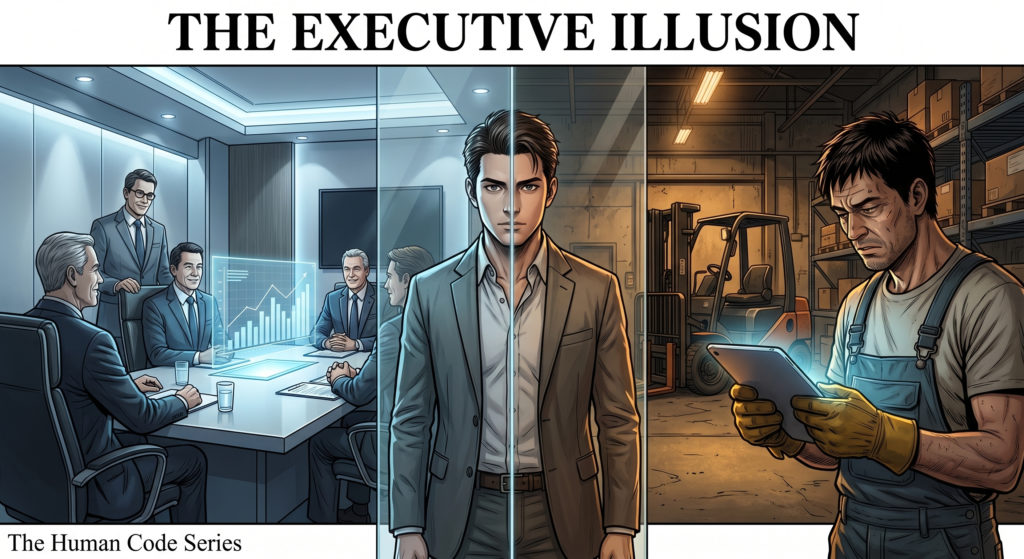
Jest 9:00 rano, siedzisz w cichej, nieskazitelnie czystej sali konferencyjnej. CEO i dyrektor finansowy pochylają się nad lśniącym stołem konferencyjnym, rzucając hasłami „transformacja cyfrowa” i „płynna automatyzacja” niczym konfetti. Właśnie przeznaczyli ogromną część swojego budżetu na ten projekt i widać w ich oczach pełną nadziei ulgę. Dla nich ten system to obietnica: bezbłędne działanie, natychmiastowa szybkość, nieograniczony zysk. Zaczynamy od poniedziałku.
Po południu idziesz do magazynu. Jest głośno. Wi-Fi prawdopodobnie traci zasięg co dziesięć metrów. Zmęczony operator w grubych rękawicach roboczych wpatruje się w skaner kodów kreskowych, który mu właśnie podałeś. Przez chwilę milczy. Potem: „Pięć kliknięć, żeby przesunąć jedną paletę? Powiedz ciężarówkom, żeby się nie spieszyły. Ta dostawa będzie gotowa, kiedy piekło zamarznie”
Witamy w Executive Illusion.
Dwie rzeczywistości
Największą pułapką w naszej pracy jest zapominanie, że projekt ERP to w zasadzie dwa różne projekty realizowane w tym samym czasie.
Zarząd kupił wizję. Kupił kontrolę, przejrzystość i dane. Chcą wiedzieć dokładnie, ile kosztuje konkretne zlecenie produkcyjne, co do centa. Aby uzyskać te dane, często projektują procesy, które wymagają od operatorów raportowania każdej mikroaktywności do systemu.
Z drugiej strony, hala produkcyjna ma do czynienia z fizyką. Zmaga się z opóźnionymi dostawcami, zepsutymi maszynami i presją wypuszczenia towaru przed końcem zmiany. Dla osób pracujących w magazynie system ERP często wydaje się niekończącym się torem przeszkód. Działa jak ogromna codzienna przeszkoda, dodatkowy ekran i ciężka warstwa cyfrowych tarć, dodawana do i tak już wyczerpującej zmiany.
Słuchaj tylko zarządu, a zaprojektujesz elegancką katastrofę. System tak skomplikowany, że operatorzy go znienawidzą, zbojkotują lub wprowadzą do niego fałszywe dane tylko po to, by ominąć sterowanie. Słuchaj tylko hali produkcyjnej, a zbudujesz szybki system, który nie da kadrze kierowniczej ani grosza z tego, za co zapłaciła.
Jako konsultant biznesowy jesteś w samym środku. Zabawne, co?
Sztuka odpychania
Większość konsultantów wybiera łatwiejsze rozwiązanie. Kiedy menedżer prosi o wykonanie bardzo złożonego kroku raportowania, konsultant po prostu kiwa głową, konfiguruje system i narzuca go pracownikom. Następnie, gdy pracownicy narzekają, konsultant chowa się za klasyczną wymówką: „Kierownictwo o to prosiło”.
To podejście rodzi niechęć. Zatruwa każde uruchomienie.
Dobry konsultant ma odwagę rzucić wyzwanie iluzji kierownictwa. Kiedy dyrektor prosi o proces, który sparaliżuje halę produkcyjną, musisz się temu przeciwstawić. Musisz znaleźć sposób, by uprzejmie powiedzieć: „Rozumiem, dlaczego potrzebujesz tych danych. Ale proszenie kierowcy, żeby zdjął rękawiczki i wpisał 12 cyfr na tablecie, tworzy wąskie gardło. Znajdźmy mądrzejszy sposób”.
Trzeba chronić ludzi wykonujących najtrudniejsze zadania, jednocześnie dostarczając firmie wartość, której potrzebuje.
Przetrwanie ognia krzyżowego
Aby pokonać tę przepaść, nie tracąc przy tym rozumu ani zaufania klienta, trzeba zastosować zupełnie inny schemat postępowania.
Opanuj dwukierunkowe tłumaczenie. Przestań wydawać instrukcje. Zacznij dzielić się kontekstem. Operator nie potrzebuje kolejnego kodu kreskowego do zeskanowania. Musi wiedzieć, że kod kreskowy ucisza dział sprzedaży dzwoniący do niego co godzinę z pytaniem o miejsce zamówienia. Powiedz mu dokładnie to: „Wiem, że to skanowanie jest irytujące, ale automatycznie aktualizuje dział sprzedaży, więc przestają do ciebie dzwonić”. Nagle dodatkowe kliknięcie przynosi osobiste korzyści. Przestaje być przeszkodą, a staje się tarczą.
Ale to działa w obie strony. Trzeba też przekazać kadrze zarządzającej informacje o fizycznych trudnościach na hali produkcyjnej, aby zrozumiała, dlaczego dana procedura wymaga uproszczenia. Jeśli kadra kierownicza widzi tylko czysty pulpit, nigdy nie zrozumie, ile wysiłku włożono w przygotowanie każdego punktu danych.
Projektuj na piątkową popołudniową zmianę. Przestań projektować dla osoby z broszury dostawcy, tej uśmiechającej się do ekranu ze świeżą latte. Taka osoba nie istnieje. Projektuj dla operatora w piątkowe popołudnie, dwie godziny po godzinach, z krzyczącą za nim maszyną i krzyczącym przed nim kierownikiem. Zadbaj o przejrzystość interfejsu. Ogranicz liczbę kliknięć do minimum. Jeśli proces wymaga idealnego skupienia, w rzeczywistości zawodzi.
Zmuś się do zderzenia z rzeczywistością. Czasami potrzeba czegoś więcej niż słów. Jeśli istnieje ogromny rozdźwięk między prośbą menedżera a rzeczywistą rzeczywistością, zaproś menedżera, aby przeszedł się z tobą po sali. Niech stanie obok operatora, który faktycznie wykonuje zadanie.
Robiłem to wielokrotnie w swojej karierze i za każdym razem działa. Kiedy menedżer widzi, jak prawdziwy człowiek poci się, balansując ciężkim pudełkiem jedną ręką, jednocześnie klikając w rozwijaną listę, którą zaprojektował, siedząc w wygodnym fotelu, dane zyskują twarz. Teoretyczna perfekcja wali się w gruzy. A iluzja kierownictwa topnieje.
Moje ostateczne ujęcie
Najbardziej elegancka architektura nie ma żadnego znaczenia, jeśli ludzie na pierwszej linii frontu odmawiają jej używania.
W końcu to ludzie są silnikami generującymi Twoje dane. Utrudnij im życie, uprzykrzając im życie nadmiernie akademickimi procesami, a znajdą obejścia. Celowo zeskanują niewłaściwy kod kreskowy. Skopiują wczorajsze wartości do dzisiejszego raportu. A piękne pulpity menedżerskie będą pełne śmieci, których nikt nie będzie w stanie zlokalizować źródła.
Twoim zadaniem jest zrównoważyć marzenia zarządu z rzeczywistością hali produkcyjnej. Słuchaj menedżerów, ale zawsze projektuj z myślą o zmęczonym operatorze. Kiedy sprawisz, że oprogramowanie będzie działać dla ludzi, wyniki biznesowe naturalnie przyjdą same.
Następnie: zaprojektowaliśmy system, zorganizowaliśmy zespoły i czas włączyć przełącznik. Zanurzymy się w kacu przed uruchomieniem.
Napisane przez Andreę Guaccio
21 maja 2026 r